Yoga is not just a tool for flexibility and relaxation; it can also be a powerful way to build strength, especially in areas like your arms and shoulders. The benefits of practicing yoga go beyond just stretching — many poses challenge your muscles, helping to improve endurance, strength, and stability.
In this article, we will explore some of the best yoga poses that target the arms and shoulders, along with their benefits and tips for proper form. Whether you’re a beginner or an experienced practitioner, these poses will help you develop a stronger upper body and increase your overall balance and coordination.
1. Plank Pose (Phalakasana)
# Plank Pose for Building Upper Body Strength
Plank Pose stands out as one of the best yoga positions for developing strong arms and shoulders. When you hold your body straight while balancing on your palms & toes you activate your arms & shoulders along with your core muscles. This pose requires you to maintain a rigid position similar to the top of a push-up. Your entire body forms a straight line from your head down to your heels. The sustained hold forces your arm muscles to work continuously to support your body weight. Your shoulders bear significant load during this exercise. The deltoid muscles engage to stabilize your shoulder joints while your rotator cuff muscles work to keep everything aligned. This constant tension builds both strength and endurance in your shoulder region. The beauty of Plank Pose lies in its simplicity and effectiveness. You don’t need any equipment or special space to practice it. Just a flat surface & your own body weight provide everything necessary for a challenging workout. Beginners can start by holding the position for 10 to 15 seconds. As your strength improves you can gradually extend the duration. Many practitioners work up to holding planks for a minute or longer. The pose also teaches proper body alignment and posture awareness. You learn to engage your core while keeping your spine neutral. This awareness transfers to other physical activities and daily movements. Regular practice of Plank Pose creates noticeable improvements in arm definition & shoulder stability. Your wrists also become stronger from supporting your body weight. These benefits make it a valuable addition to any fitness routine.
 Simple Morning Hydration Habits That Support Clearer Skin and Higher Energy Throughout the Day
- Strengthens the arms, shoulders, and core.
- Improves stability and balance.
- Enhances endurance.
Tips:
- Keep your body in a straight line from head to heels.
- Avoid letting your hips sag or rise.
- Press your palms firmly into the mat to engage the shoulders.
2. Chaturanga Dandasana (Four-Limbed Staff Pose)
Chaturanga Dandasana works on the arms and shoulders by building strength in the triceps, deltoids and chest muscles.
- Builds strength in the arms, shoulders, and core.
- Improves alignment and posture.
- Enhances stability and endurance.
Tips:
- Lower your body slowly, keeping your elbows close to your sides.
- Keep your core engaged to protect your lower back.
- Ensure your shoulders are in line with your elbows when lowering.
3. Dolphin Pose (Ardha Pincha Mayurasana)
The Dolphin Pose looks a lot like Downward-Facing Dog except you rest on your forearms instead of your hands. This position works well for strengthening your shoulders and arms and it helps make your body more flexible at the same time.
- Strengthens the arms and shoulders.
- Stretches the back, hamstrings, and calves.
- Improves posture and core strength.
Tips:
- Keep your elbows shoulder-width apart to prevent straining the joints.
- Engage the core and lift the hips high to lengthen the spine.
- Press the forearms into the mat for stability.
4. Downward-Facing Dog (Adho Mukha Svanasana)
Downward-Facing Dog is excellent for both stretching and strengthening. This pose builds strength in the arms and shoulders while also working the entire body.
- Strengthens the arms, shoulders, and core.
- Stretches the back, hamstrings, and calves.
- Improves circulation and posture.
Tips:
- Spread your fingers wide and press into the mat for maximum arm engagement.
- Keep your feet hip-width apart and your hands shoulder-width apart.
- Lengthen the spine, and don’t let your shoulders come up to your ears.
5. Side Plank Pose (Vasisthasana)
Side Plank Pose offers an effective method to work your arms and shoulders. The position demands both balance and stability while building strength in your obliques shoulders, and wrists. This pose challenges your body to maintain alignment as you support your weight on one arm. Your core muscles engage deeply to keep your body straight and prevent sagging. The supporting arm and shoulder must work hard to hold your entire body weight. Regular practice of Side Plank Pose develops functional strength that translates to daily activities. Your oblique muscles on the sides of your torso activate to stabilize your spine. Meanwhile your wrist joints adapt to bearing load in a new way. The pose also improves your sense of body awareness & control. You learn to distribute weight evenly and make small adjustments to stay balanced. This mind-body connection grows stronger with each practice session. Side Plank Pose can be modified to match your current fitness level. Beginners might keep their bottom knee down for extra support. More advanced practitioners can lift their top leg or add arm movements for additional challenge.
- Strengthens the arms, shoulders, and obliques.
- Improves balance and stability.
- Tones the core and increases endurance.
Tips:
- Keep your body in a straight line from head to heels.
- Engage your core and avoid letting your hips drop.
- Stack your feet or place one foot in front of the other for added support.
6. Warrior II Pose (Virabhadrasana II)
Although primarily a leg-strengthening pose, Warrior II also engages the shoulders and arms, helping to build strength and endurance in the upper body.
- Strengthens the shoulders, arms, and legs.
- Improves balance and stability.
- Opens the chest and hips.
Tips:
- Keep your shoulders relaxed and away from your ears.
- Reach your arms in opposite directions, keeping your palms facing down.
- Bend your front knee deeply and keep your back leg straight.
7. Camel Pose (Ustrasana)
Camel Pose is a backbend that also stretches and strengthens the shoulders and arms. By reaching back to grab your heels, this pose opens the chest and works the upper body.
- Opens the chest and shoulders.
- Stretches the front of the body and strengthens the back.
- Improves flexibility in the spine and hips.
Tips:
- Keep your hips aligned with your knees as you reach back for your heels.
- Engage your core to protect the lower back.
- Don’t overextend — listen to your body and avoid straining the shoulders.
8. Reverse Plank Pose (Purvottanasana)
# Reverse Plank
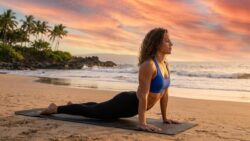
Reverse Plank is a great exercise that builds strength in your shoulders and arms. It also helps make your body more flexible while toning your core muscles & legs. This pose works multiple muscle groups at the same time. When you hold your body up in this position your arms and shoulders must support your entire weight. This creates significant strengthening benefits for your upper body. Your core muscles work hard to keep your body straight and stable during the exercise. Your abdominal muscles and lower back engage throughout the movement. This constant engagement helps develop a stronger & more toned midsection. The legs also receive substantial benefits from this pose. Your hamstrings and glutes activate to keep your hips lifted. Your calves work to stabilize your feet and ankles. Regular practice leads to better muscle definition in your lower body. Flexibility improvements come from the stretch this pose creates across the front of your body. Your chest opens up and your hip flexors lengthen. This counteracts the tightness many people develop from sitting for long periods. The reverse plank challenges your balance & coordination as well. You must maintain proper alignment while supporting yourself on your hands and feet. This develops better body awareness and control over time.
- Strengthens the arms, shoulders, and core.
- Opens the chest and stretches the legs.
- Improves flexibility in the spine.
Tips:
- Press your hands firmly into the mat and engage your core to lift your body.
- Keep your feet flexed and legs straight.
- Avoid letting your head drop back; keep it aligned with your spine.