Yoga is one of the best ways to improve your overall well-being. A consistent practice not only helps you relax but also works wonders for your core strength and flexibility. In just 11 minutes a day, you can engage in a routine that targets both these areas, boosting your energy and vitality. This article will guide you through an 11-minute yoga routine that you can easily incorporate into your daily schedule.
Why Should You Focus on Core Strength and Flexibility?
The core muscles are essential for keeping your body balanced and stable while building overall strength. These muscles help you maintain good posture and protect you from getting hurt when you exercise or play sports. Flexibility works differently by letting your joints & muscles move through a wider range of motion. When you work on flexibility your muscles become less stiff and your body can move more easily and naturally. Both core strength and flexibility matter for everyday activities. A strong core supports your spine and makes simple tasks like bending down or lifting objects much safer. Better flexibility means you can reach for things without straining or turn your body without discomfort. Together these two elements create a foundation for healthy movement patterns that last throughout your life.
11-Minute Yoga Routine to Increase Core Strength and Flexibility
1. Cat-Cow Pose (1 minute)
How to Do It: Begin on all fours, ensuring that your wrists are aligned directly beneath your shoulders and your knees are under your hips. On an inhale, arch your back, drop your belly towards the mat, and look up, entering the “cow” position. On the exhale, round your back, tuck your chin towards your chest, and pull your belly button towards your spine to come into the “cat” position.
Why It’s Beneficial: This pose helps to warm up the spine, enhance flexibility in the back, and activate the core.
 Simple Morning Hydration Habits That Support Clearer Skin and Higher Energy Throughout the Day
2. Downward-Facing Dog (1 minute)
How to Do It: Start from all fours and lift your hips towards the ceiling, creating an inverted V-shape. Press your heels toward the floor and keep your head aligned with your arms. Hold the position for 1 minute, focusing on stretching your hamstrings and calves while strengthening the core.
Why It’s Beneficial: This pose lengthens and stretches the hamstrings, calves, and spine while engaging the entire body and promoting core activation.
3. Plank Pose (1 minute)
How to Do It: Start in a push-up position, with your hands shoulder-width apart and your body in a straight line from head to heels. Engage your core to maintain a flat back and avoid sagging in your hips. Hold this position for 1 minute.
Why It’s Beneficial: This is an excellent core-strengthening pose that works your abs, arms, and legs simultaneously.
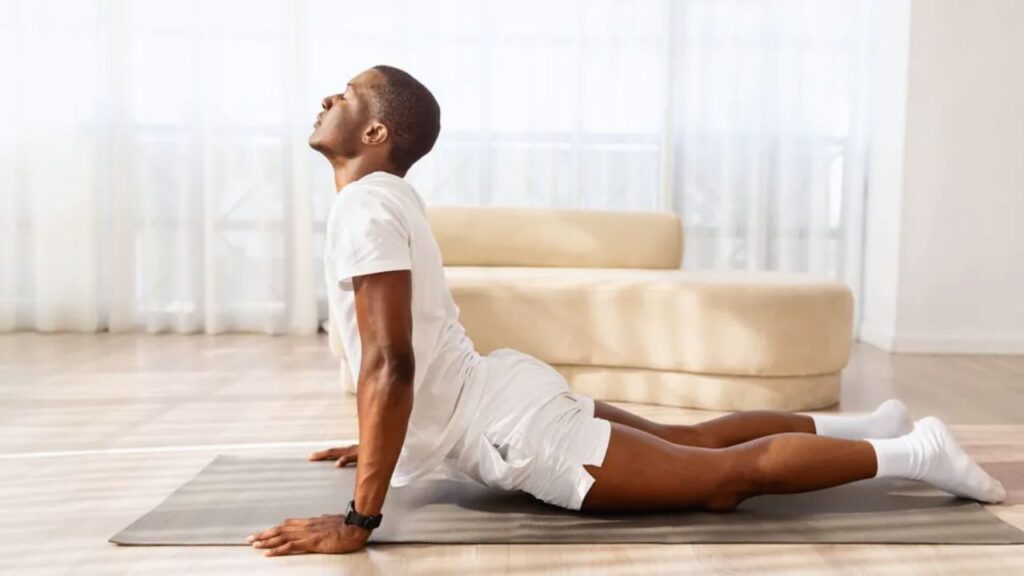
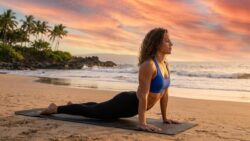
4. Cobra Pose (1 minute)
How to Do It: Lie face down with your hands placed underneath your shoulders, elbows bent. As you inhale, gently press your palms into the floor and lift your chest upward, keeping your elbows slightly bent. Look upwards and extend through your spine.
Why It’s Beneficial: Cobra pose strengthens the lower back, stretches the chest and abdominal muscles, and increases flexibility in the spine.
5. Warrior II (1 minute)
How to Do It: Step your feet wide apart and turn one foot out by 90 degrees. Bend the front knee and extend your arms out parallel to the floor, keeping your shoulders down and gaze forward. Hold for 1 minute, then switch sides.
This pose helps build stronger & more flexible hips and legs. It also improves your balance & makes your core muscles more stable.
6. Boat Pose (1 minute)
How to Do It: Sit with your knees bent and feet flat on the floor. Lean back slightly while lifting your legs, creating a V-shape with your body. Extend your arms forward and balance on your sitting bones. Hold for 1 minute.
# Why Boat Pose Works Well
Boat pose builds strength throughout your entire core area. This includes both your abdominal muscles and your hip flexors.
7. Triangle Pose (1 minute)
**How to Do It:**
Stand with your feet positioned wider than your shoulders. Straighten one leg out to the side while keeping your hips facing forward and your arms stretched out at shoulder level. Bend sideways over your front leg & place your hand on your shin or down to the floor if you can reach it. Turn your head to look up toward the ceiling. Stay in this position for one minute before switching to the other side.
# Why It’s Beneficial
Triangle pose stretches the hips & legs & sides of the body. At the same time it builds core stability.
8. Seated Forward Fold (1 minute)
How to Do It: Sit with your legs extended in front of you. Inhale and lengthen your spine. As you exhale, hinge at the hips and reach for your feet. Keep your back straight, and don’t worry if you can’t touch your feet—just reach as far as you can.
Why It’s Beneficial: This pose enhances flexibility in the hamstrings and lower back, while also providing a gentle stretch for the entire body.
9. Bridge Pose (1 minute)
**How to Do It:**
Lie flat on your back and bend your knees so your feet rest firmly on the floor. Keep your arms relaxed by your sides with your palms pressed down against the ground. Push through your feet to raise your hips upward toward the ceiling. Maintain this elevated position for one full minute while concentrating on tightening your glute muscles and keeping your core muscles activated throughout the hold.
# Why It’s Beneficial
Bridge pose strengthens the core muscles along with the glutes and lower back. At the same time it promotes flexibility in the spine and hip flexors.
10. Child’s Pose (1 minute)
# How to Do It
Start by kneeling on the floor. Your big toes should touch each other while your knees stay apart. Lower your body back until you are sitting on your heels. Extend your arms forward along the floor. Let your forehead rest gently on the mat. Take slow deep breaths and allow your body to relax completely.
Child’s pose offers a gentle stretch for your back and hips. This position gives you a moment to relax and recover after working your core muscles intensely. The pose helps your body restore itself while releasing tension from the previous exercises.
Tips for Success
Consistency is Key: Performing this routine daily will lead to noticeable improvements in both core strength and flexibility.
# Focus on Breath
Deep breathing plays a vital role in getting the most out of every pose. When you breathe in you should focus on lengthening your body. When you breathe out you should work on deepening the stretch. This breathing pattern helps you move more effectively through each position. Proper breath control allows your muscles to relax and extend further than they would with shallow breathing. As you inhale your body naturally creates space and expansion. As you exhale your body can safely sink deeper into the stretch without forcing anything. Make your breathing steady & deliberate throughout your practice. This approach connects your mind to your movements and helps you stay present in each moment. The rhythm of your breath becomes a guide that tells you when to move and when to hold still.
You can adjust poses whenever you need to make them easier. If a position feels too difficult try using props such as yoga blocks or change the pose to match your current skill level.