
It makes no difference that you slept only four hours or that your day is full of meetings or that you really tried this morning. You move closer and look hard at the mirror and then you see it: the skin under your eyes appears dry and uneven with a weird texture. The concealer you smoothly applied just ten minutes earlier has sunk into deep lines & is sticking to every tiny fold you never noticed before. Your phone rings and you are running late but you cannot look away from your reflection thinking about how everything turned so cakey. You try patting it softly with your finger but it just balls up. You try to smooth it out but it smears across your skin instead. Each time you touch it things get worse. The product that promised a perfect natural finish now makes you look exhausted & overdone.
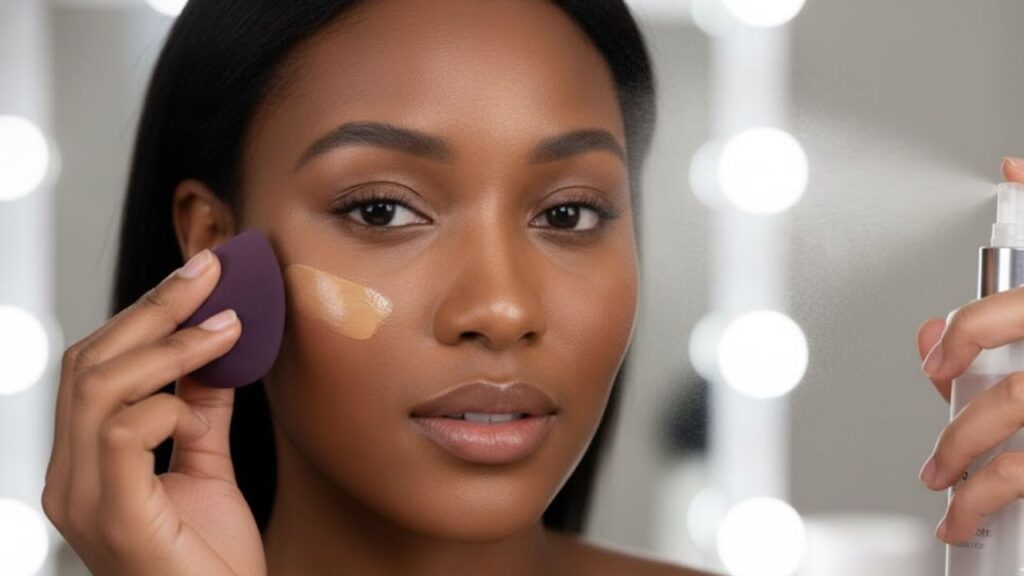
Why concealer starts looking cakey
Many people assume the problem lies with the product, but more often the real issue is the skin underneath. Concealer acts like a magnifier, making everything on your face more visible. Dry patches, fine lines, leftover eye cream, and even traces of old mascara can quickly ruin the finish. The under-eye area has very few oil glands, making the skin fragile and constantly in motion as you talk, laugh, scroll, or squint. A thick layer of pigment sitting on such a dry, moving surface is almost guaranteed to crease and look heavy.
The concealer itself is not always the problem. It is often being forced to do too much without support. On a crowded Monday morning commute, this can be easy to spot. Someone checks their reflection on their phone and lightly taps under one eye. On one side, the concealer has broken into tiny cracked sections. On the other, it looks smoother, more diffused, and closer to real skin.

How rushed skincare leads to creasing
Later, she explains she rushed her skincare and skipped eye cream due to lack of time, then applied a heavy, full-coverage concealer straight from the applicator. By mid-morning, it had already settled into lines. At lunch, she remembered a tip from a makeup artist about warming concealer with fingertips and pressing it in instead of dragging. In just ten seconds, one side looked better. The other still resembled dried paint.
Beauty brand studies quietly confirm what mirrors already show. Many people apply too much concealer, too quickly, on skin that is not prepared. The clash between texture, amount, and skin condition is where caking begins. Cakey concealer is rarely about the shade or brand. It comes down to balance.
Texture, quantity, and skin readiness
When concealer is too dry, it clings to rough skin. When it is too creamy, it slides into lines and pools. Using too much causes it to sit on top of the skin instead of blending in. Applying it over slightly flaky, unprepped skin turns every tiny patch into a spotlight. Body heat, facial movement, and even humidity influence how the product behaves.
Think of concealer as a soft wax that melts, moves, and sets in layers. If those layers are uneven, overloaded, or reacting with an oily eye cream underneath, the product will almost always crack or gather. Cakey concealer is simply makeup that never truly fused with the skin.
The quick 10-second fix for cakey concealer
The fastest solution is surprisingly simple: clean, warm fingers and gentle pressure. No extra product or tools are required. Fingertips are slightly warmer than the skin, which helps soften concealer trapped in fine lines. Look down into a mirror to lightly stretch the under-eye area. Place your ring finger on the cakey spot, count to three, then gently press and roll without swiping.
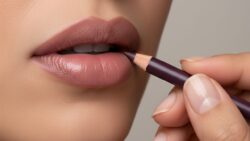 Lip Definition Trick: The Exact Liner Method That Makes Lips Look Fuller Without Overlining
This motion nudges the product back into the skin instead of scraping it away. Repeat wherever you see concealer collecting near the inner or outer corners. In about ten seconds, the area looks more like natural skin and less like makeup.
Why pressing works better than reapplying
During a shoot, a beauty editor who had been awake since early morning noticed her concealer cracking halfway through the day. There was no time to redo her base. She dabbed a tissue under her eye to remove excess oil, warmed her finger, and pressed the product back in. The concealer softened instantly. The lines remained, but the heaviness disappeared. The same technique works at your desk, in a restroom, or in the back of a cab.
It looks like a casual touch, but it quietly resets the makeup. One common mistake is adding more concealer on top of creased makeup. This creates layers that collapse again. Another is over-powdering, which exaggerates texture. Powder only works when the concealer is already smooth.
Letting go of the idea of perfect concealer
Once you see how a small adjustment can fix cakey concealer, it changes how you think about makeup. The goal does not have to be a rigid base that never moves. Instead, makeup can be something that adapts as your day unfolds. Choosing formulas that respond well to warmth and touch makes touch-ups simple.

Skin has natural texture and fine lines, especially under the eyes. Creasing when you smile is normal. A quick press with a finger, a tissue, or a light touch of powder can restore balance. When concealer becomes something you adjust rather than fight, it feels easier to wear. A crease is no longer a failure. It is simply a sign of an expressive face that can be smoothed gently in under ten seconds.
| Point clé | Détail | Intérêt pour le lecteur |
|---|---|---|
| Préparer la peau, pas la cacher | Appliquer une fine couche d’hydratant bien absorbé avant le concealer | Réduit les patchs et permet un rendu plus lisse |
| Le geste des 10 secondes | Utiliser la pression du doigt chaud pour faire fondre et redistribuer le produit | Corrige le côté cakey sans tout démaquiller |
| Corriger, pas empiler | Retirer l’excès, lisser, puis appliquer de la poudre ciblée |
