Simple Yoga to Counter the Effects of Desk Work Spending many hours sitting at a desk gradually affects your physical wellbeing. Office workers commonly experience tight hips and stiff shoulders along with lower back discomfort and eye fatigue. These issues become regular companions during the workday. However you don’t need strenuous exercise routines or lengthy training sessions to improve how you feel. Basic yoga movements can effectively reverse the harm from extended sitting periods & make your body feel more comfortable and relaxed as you go through your day.
The Hidden Impact of Sitting Too Long
Sitting for extended periods causes your hip flexors to tighten while your glutes stop working properly & your spine loses its natural mobility. This gradually creates problems like bad posture and neck pain along with headaches and fatigue. Your blood circulation slows down when you sit too much and this makes you feel tired & foggy mentally. Yoga helps fix these issues by using gentle stretches and controlled movements combined with focused breathing techniques.
Yoga Benefits for Desk-Bound Workers
Yoga works well for people who spend most of their time sitting because it focuses on the body parts that get affected the most. Doing it regularly helps reduce pain in your back and neck while making your posture better. It also gets your blood flowing properly & lowers your stress levels. People who work at desks often find they can concentrate better and don’t feel as tired in the afternoon. Taking short yoga breaks throughout the day can create real improvements if you do them on a regular basis.

Quick Desk Yoga Poses to Try
You do not need special equipment or a lot of space to practice these poses. A small area near your desk or at home is enough.
 Simple Morning Hydration Habits That Support Clearer Skin and Higher Energy Throughout the Day
Seated Neck Stretch
Sit tall with your feet flat on the floor. Gently tilt your head to one side and hold for a few breaths, then switch sides. This releases tension in the neck and shoulders caused by screen time.
Seated Spinal Twist
While seated, place one hand on the opposite knee and gently twist your torso. Keep your spine long. This pose helps improve spinal mobility and reduces stiffness in the lower back.
Cat Cow Stretch
You can do this on the floor or seated on a chair. Inhale as you arch your back and lift your chest. Exhale as you round your spine and tuck your chin. This movement keeps the spine flexible and relieves back tension.

Standing Forward Fold
Stand up, bend forward slowly, and let your head and arms hang. Slightly bend your knees if needed. This pose stretches the hamstrings and relaxes the spine after long sitting hours.
Chest Opener Stretch
Interlace your fingers behind your back and gently lift your hands while opening your chest. This counteracts rounded shoulders and improves posture.
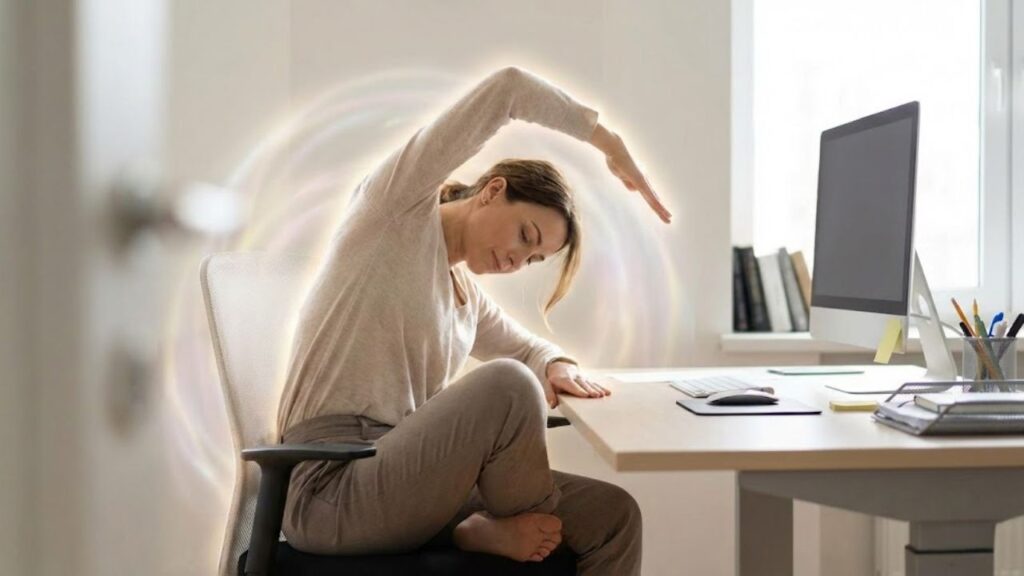
Seated Hip Stretch
Cross one ankle over the opposite knee while seated. Gently lean forward. This stretch helps release tight hips caused by prolonged sitting.
Ideal Yoga Frequency for Office Life
Doing yoga regularly is more important than doing it for a long time. You can get benefits from just five to ten minutes once or twice each day. If you work at a desk you might find it better to take several short yoga breaks during your work hours instead of doing one long practice session. When you stretch in the morning you get your body ready for what comes next. Yoga in the evening helps you let go of the tension that has built up during the day.

Make Desk Yoga a Daily Habit
Set a reminder on your phone or computer so you remember to stretch every hour. Make sure your yoga routine stays simple and does not become too much to handle. When you hold each pose you should focus on taking slow and deep breaths. The most important thing is to pay attention to what your body tells you and never push yourself into pain.